![Holistiplan Logo (800x200 px).webp]](https://help.holistiplan.com/hs-fs/hubfs/Holistiplan%20Logo%20(800x200%20px).webp?width=160&height=40&name=Holistiplan%20Logo%20(800x200%20px).webp)
Taxpayers who meet both the ownership and residency tests can exclude up to $250,000 of gain on the sale of a primary residence. This exclusion is at the individual level, meaning that married filing joint couples can exclude up to $500,000 of gains. (Note that the exclusion is of the gain, not of the entire sales amount.)
- Ownership test: the taxpayer must have owned the home for at least two years of the five-year period ending on the date of the sale
- Residency test: the taxpayer must have lived in the home as a primary residence for at least two years of the five-year period ending on the date of the sale
If the taxpayer meets the criteria and any amount of gain is below the exclusion amount, the IRS instructions are for the taxpayer to not include the amount of the excluded gain on Schedule D.
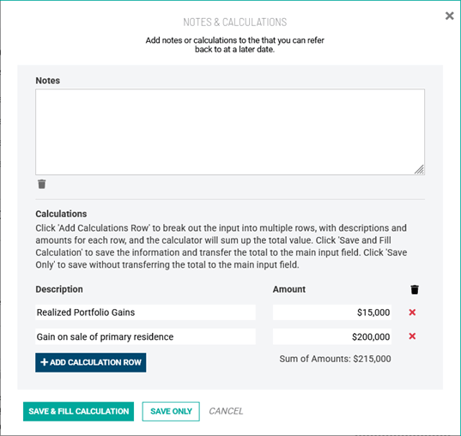
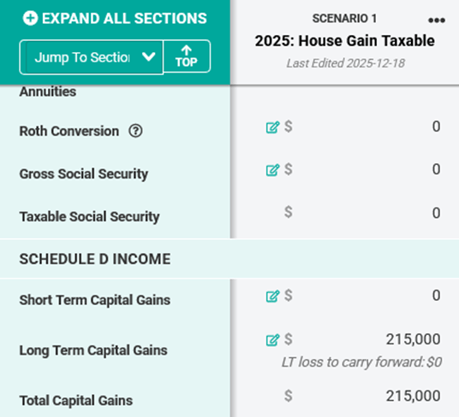
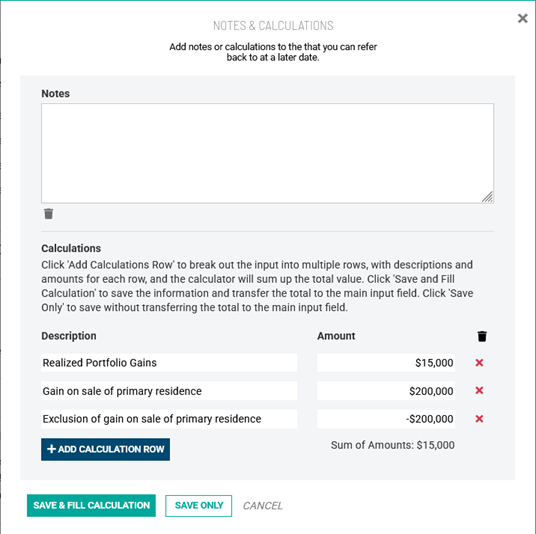
To illustrate the tax impact of this exclusion, first create a scenario showing the gain on the house sale as taxable. In this example, we’ll use the Field Notes section to detail two different sources of realized gains.
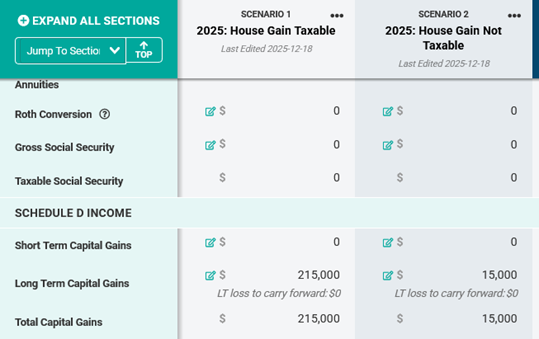
Next, make a copy of this scenario and remove the gains attributable to the sale of the primary residence. Again, we’ll use Field Notes to keep track of our underlying assumptions:
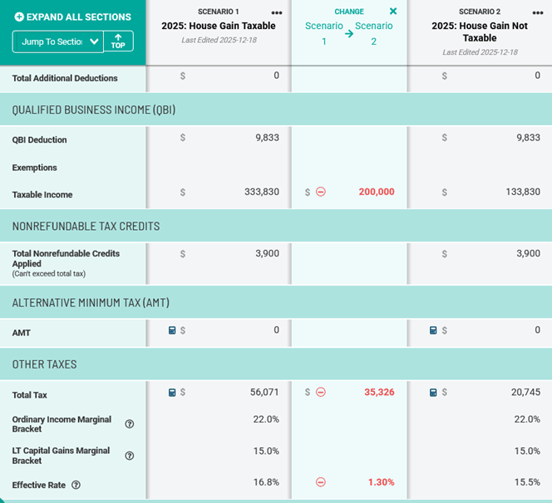
To complete the comparison and illustrate the tax savings, use the Comparison Tool: